
How Proper Confined Space Training Builds Safer Careers and Stronger Australian Workplaces
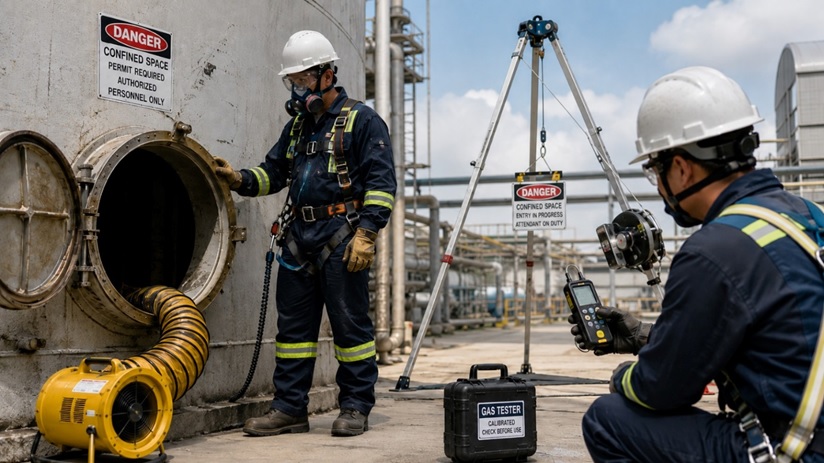
Every day, thousands of Australians work in environments that most people never see. Underground utility tunnels, storage tanks, pipelines, silos, process vessels and confined industrial spaces are all critical to industries such as construction, mining, manufacturing, oil and gas, transport and utilities. While these workplaces keep Australia’s economy moving, they also present some of the highest workplace safety risks.
Working in confined spaces requires much more than practical experience. It demands careful planning, hazard awareness, teamwork and nationally recognised training that prepares workers for situations where even a small mistake can have serious consequences. That is why enter and work in confined spaces training has become an essential qualification for professionals working in high-risk industries.
As Australia’s safety standards continue to evolve, investing in quality training is no longer simply about meeting compliance requirements. It is about protecting lives, improving confidence and creating better career opportunities.
Understanding the Risks of Confined Spaces
A confined space is any area that is not designed for continuous occupancy and has limited means of entry or exit. Examples include underground pits, storage tanks, pressure vessels, tunnels, pipelines, shafts and certain processing equipment.
These environments often contain hazards that are difficult to detect without proper assessment. Low oxygen levels, toxic gases, flammable atmospheres, restricted movement and limited escape routes can all increase the risk of serious incidents if workers are not adequately prepared.
Unlike many workplace hazards that are visible, confined space dangers are often invisible. A space that appears safe from the outside may contain hazardous atmospheric conditions or rapidly changing environments that require specialised monitoring equipment and established emergency procedures.
This is why employers place significant importance on ensuring workers receive nationally recognised enter and work in confined spaces training before undertaking these tasks.
More Than Compliance – Developing Practical Safety Skills
One of the biggest misconceptions about workplace safety training is that it focuses only on regulations and paperwork. In reality, quality training is designed to develop practical skills that workers use every day.
A comprehensive confined space course helps participants understand how to:
- Identify workplace hazards before entering confined areas
- Conduct appropriate risk assessments
- Use gas detection and atmospheric monitoring equipment
- Follow permit-to-work systems
- Communicate effectively with team members
- Understand emergency response procedures
- Apply safe work practices under real workplace conditions
These practical skills not only help workers comply with Australian workplace health and safety legislation but also give them greater confidence when performing their duties.
For employers, having a workforce that understands these procedures contributes to safer worksites, fewer incidents and improved operational efficiency.
Why Employers Value Recognised Training
Australia’s construction, mining and industrial sectors continue to face increasing expectations around workplace safety and competency. Employers are looking beyond experience alone and actively seeking workers who have completed recognised training through accredited providers.
Holding nationally recognised qualifications demonstrates a commitment to professionalism and continuous learning. It shows employers that workers understand current industry expectations and are prepared to follow established safety procedures in high-risk environments.
For many organisations, these qualifications are now considered an essential part of workforce development rather than simply a compliance requirement.
Building Long-Term Career Opportunities
Safety qualifications often provide benefits that extend well beyond the immediate workplace.
Workers who continually update their skills position themselves for broader employment opportunities, particularly as industries adopt higher safety standards and increasingly complex projects.
Whether working in construction, civil infrastructure, mining, manufacturing, energy or utilities, employers appreciate candidates who invest in their own professional development.
Completing enter and work in confined spaces training can strengthen a resume while demonstrating the ability to work responsibly in demanding environments. Combined with additional industry certifications, it helps workers remain competitive in an evolving job market.
Flexible Learning That Fits Around Work
Balancing work commitments with professional development can be challenging, particularly for those working on rotating shifts or regional projects.
Fortunately, modern training providers now offer flexible learning solutions that allow workers to maintain their qualifications without unnecessary disruption to their schedules.
Online refresher programs and blended learning options provide greater accessibility while ensuring participants continue to meet nationally recognised standards.
This flexibility allows both employers and employees to maintain compliance while minimising downtime and improving workforce availability.
Choosing the Right Training Provider Matters
Not all training experiences are the same. The quality of instruction, industry knowledge and ongoing student support can significantly influence how well participants apply their learning once they return to the workplace.
Kangaroo Training Institute has established itself as one of Australia’s respected providers of nationally accredited trade and workplace safety training.
As a Registered Training Organisation (RTO No. 45142), the institute delivers training across industries including construction, manufacturing, defence, shipbuilding, mining, oil and gas, transport and energy.
Its programs combine practical learning with industry-relevant knowledge, ensuring students develop skills that can be applied immediately on site rather than simply completing theoretical assessments.
The institute’s partnerships with respected organisations including the Australian Welder Certification Register (AWCR) and Weld Australia further demonstrate its commitment to delivering training that aligns with recognised industry expectations.
Student Support Beyond the Classroom
A quality learning experience doesn’t end once a course begins.
Many workers undertaking professional training are balancing employment, family responsibilities and changing work schedules. Having access to reliable support throughout the learning journey makes a significant difference.
Kangaroo Training Institute provides 24*7 online service support through phone, live chat and email, allowing students to receive assistance whenever they need guidance with enrolments, course materials or training enquiries.
This commitment to student success has helped the institute build an excellent reputation, reflected in its consistently strong 5-star Google reviews from students across Australia.
Making Professional Development More Accessible
Investing in training is ultimately an investment in long-term career growth.
To encourage more workers to gain nationally recognised qualifications, Kangaroo Training Institute regularly provides special offers on selected courses, helping make professional development more affordable.
Current promotions include savings on selected welding programs, discounted online refresher courses for high-risk work units and referral rewards for eligible students.
These initiatives make it easier for individuals to build new skills, maintain existing certifications and continue developing professionally without placing unnecessary pressure on their budgets.
Rather than viewing training as an expense, many workers see it as an opportunity to improve their employability, strengthen workplace confidence and prepare for future career progression.
Creating Safer Workplaces Starts with Better Training
Behind every successful project is a workforce that understands how to manage risk responsibly.
Whether operating in confined spaces, working at heights or performing specialised industrial tasks, safety begins with knowledge, preparation and practical experience.
High-quality enter and work in confined spaces training provides workers with the confidence to recognise hazards, make informed decisions and contribute to safer workplaces for everyone around them.
As Australia’s industries continue to grow and safety expectations continue to rise, investing in nationally recognised training remains one of the most effective ways for both workers and employers to build stronger, safer and more productive workplaces for the future.